In any endeavor you are involved in, it’s important to surround yourself with value creators, opinionated people and those skilled in their area of expertise.
You want to make sure you don’t make the common mistake of building a team full of “Yes Men,” people with the same skill set as you, or those who bring the team down with their negativity.”
John Wooden
Dealerships are complicated animals.
In addition to selling new vehicles, dealerships operate
used car lots
parts stores
aftermarket stores
finance companies
mechanic shops
body shops
quick lube centers
insurance companies – and more
In 2025, a single new car dealership averaged over $76 million in retail sales and there were 16,990 new car dealerships in the United States. For the year, total franchised light-vehicle dealership sales exceeded $1.3 Trillion. Source: NADA 2025 Annual Financial Profile of America’s Franchised New Car Dealerships
Agents and managers should not get lulled into a false sense of security about giving advice about car dealerships. Buying and selling dealerships is not a simple or easy task and, if anyone suggests otherwise, then run away from them because they do not know what they are talking about.
Every successful person knows that a winning team requires more than intelligence. It requires more than preparation and execution.
It requires a coach that has the knowledge and experience to bring it all together. A winner has to earn the medal or the trophy. Investors who do not understand that frequently fail.
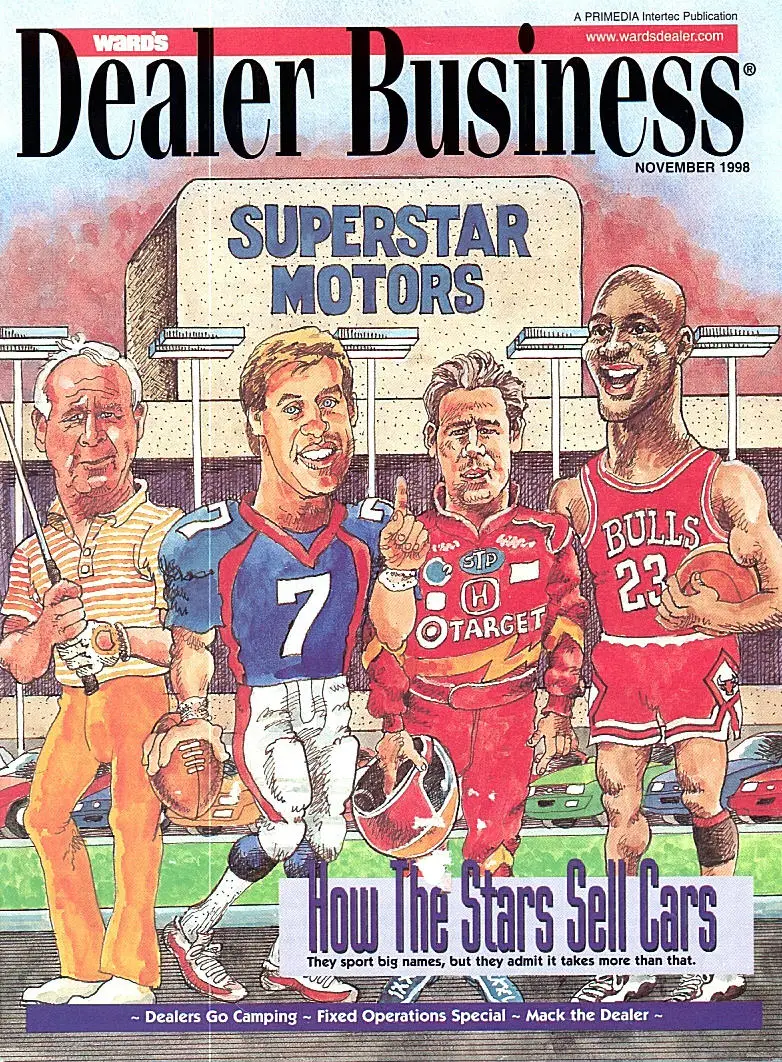
I have had the privilege of working with several celebrities and persons of wealth from all fields who have invested in the car business, such as politicians (Barry Harris, Deputy Director of the FAA under George H.W. Bush), Philanthropist (John Payton, whose family owned the NY Mets), Race Car Drivers and Race Team Owners.
I helped two of the four shown in the photo enter the car business and both are thriving today.
While there have been numerous others with whom I have not been involved and have made millions, so have many lost millions.
The lure of the car business is not unlike the Sirens calling to Odysseus, as he sailed by their island. It has drawn many to destruction.
Celebrities such as Mel Farr and Deuce McAllister are amongst the victims.
Forget how successful an athlete, celebrity, sports manager or sports agent may have been in their respective fields or professions, the retail automobile business is an entirely different animal and, over the years, I have noticed several mistakes.
First Mistake – The Factory Offered You a New Point — for FREE!
Athletes and celebrities often think they are getting a deal when the factory offers them a “new point”. Opening a New Point is not all it is cracked-up to be.
Generally, regardless of the fact that the factory (or distributor) “gives” the celebrity an open-point, be prepared to pay blue sky in the form of early losses and non-equity investment costs.
When buying an operating store, the day escrow closes there are vehicles lined up in front of the service department, the parts department has a strong retail and wholesale business, the technicians are busy, and the store’s phone number is on the Internet.
The public knows the store is there and the investor begins with a core of customers.
When opening a new point, an investor must fully capitalize it for both sales and service volumes that will not exist for at least nine to twelve months.
A new point might get some “new car” traffic the first few weeks, but trust me, there will not be a line in front of its parts and service departments.
Why? People are creatures of habit and, although the demographics may warrant a new point, and though a buyer may be a “superstar” athlete or celebrity, wooing other dealers’ existing customers will prove a challenge.
In many instances it was the second owner of the “new point” that made the money because the first owner went broke building and developing it.
But the factory/distributor always wins because it got someone to build the building and develop a new outlet to market its shareholders’ goods, while at the same time, it is the celebrity who assumes 100% of the risk involved in the financing of the project.
What if the athlete or celebrity already has experienced people advising him or her?
A diligent investor should consult with a neutral party, knowledgeable in the retail side of the industry for advice when buying or selling a dealership.
Mistake # 2 —- Factory People and Lenders ALONE Do Not Count:
(1) they are on the wholesale, versus retail, side of the business; and
(2) no matter how congenial, sincere and helpful they may be, they each have their own agenda and are bound by corporate laws that may not necessarily coincide with an investor’s.
It is up to the rookie investor’s advisors to recommend a conflict-free, knowledgeable and experienced expert in the automotive field that will protect their client’s interests.
Mistake #3 —- Employees at the Dealership ALONE Don’t Count:
Like factory and credit company people, employees have their own agenda.
So, where does one go for advice about buying or selling a store?
General Managers? Remember General managers buy and sell vehicles for a living, not dealerships.
Dealers? The average dealer buys or sells less than 10 dealerships in a lifetime.
We have completed over 1,000 automotive transactions, purchases, sales, workouts, liquidations, re-financing, valuing, etc. – Not just finding buyers or sellers or introducing people, but being on the front line working out the agreements and structuring the transaction with all the parties.
We have worked with bankruptcy courts, federal courts, state courts and lenders as mediator, automotive expert, consultant to Court Appointed Receiver, interim general manager, fraud investigators, and more.
If we learned but one thing new on each transaction, we would have acquired over 1,000 more bits of information compared with the average 50-year dealer that bought and/or sold ten stores.
That alone is a huge reason why we could make a difference for you.
If the automotive advisor is “independent” of the dealership, is “knowledgeable” in the “retail” end of the business and has been successful in “structuring,” (not just buying and selling) hundreds of new car dealership purchases and sales of both successful and insolvent dealerships and has loyalties only to you, then he or she is on the right path.
If your advisors are lacking any or all of those qualities, then it would be a good idea to get someone on the acquisition and advisory team that has the credentials.
BEFORE YOU GO, CONSIDER THIS
Football great Mel Farr was the poster child for Ford Motor Company and Ford Motor Credit for years.
“MEL FARR IS A CLASSIC AMERICAN SUCCESS STORY” – That was the headline and opening sentence in Dealer Magazine’s September /October 1999 Cover Story, by Michael Roscoe.
His Automotive Group was in the top 50 U.S. dealership groups. With revenues approaching $600 million, Black Enterprise named his group as the largest black owned company in the nation.
In that year, according to the Automotive News Data Center, Mel Farr had 11 dealerships and 13 franchises that sold 29,861 vehicles (new, used and fleet). He was in Michigan, Ohio, Maryland and Texas.
When Jesse Jackson, publicly attacked Ford’s treatment of minority dealers, Farr became its “point-man” brokering meetings with senior executives and acting as a conduit between the company and Jackson.
He mediated disputes between the automaker and individual dealers, and he promoted Ford tirelessly in public appearances.
Farr also enjoyed special status in the executive suite. He had a close relationship at Ford. He offered inner-circle advice on the Lions to Bill Ford and his son, Bill Jr. “He had some friends in high places,” said John Clissold, a retired Ford Credit executive. “Edsel was a very strong supporter.”
As I was watching Farr’s rocketing performance, I was wondering “Who is advising this guy?” and I was reminded once again of one of my dad’s expressions: “If you stand on your toes and reach high enough, a small breeze will knock you over.”
And then it came.
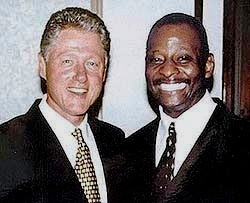
Bill Clinton had Mel to a White House dinner honoring the top 100 black business owners in the United States.
And, several months later, Ford Motor Credit pulled the plug and Mel went down the drain – all the pull and friendships were no longer enough to save him.
Sometimes dealers get so impressed by the cash flowing through their businesses and the contacts that they developed, that they think they are bulletproof.
Business is business and, by May 15, 2000, Ford auctioned off the fixtures and equipment at his last two Ford stores.
No one ever had more factory and more political connections behind them than Mel Farr. He was everybody’s poster-child and was touted as the darling of the industry. But, when trouble came, it didn’t matter. Business is business.
One lender familiar with the situation summed up this way: ‘Mel was headed for a cliff and we weren’t going over with him.’”
I have represented and ridden the ride with dealers that to the top 100 and with dealers who went from the top 100 to the bottom.
That’s what makes us uniquely qualified to be the ones to “make the difference for you!“
Advising Automobile Dealers LLC
Insight that Makes a Difference
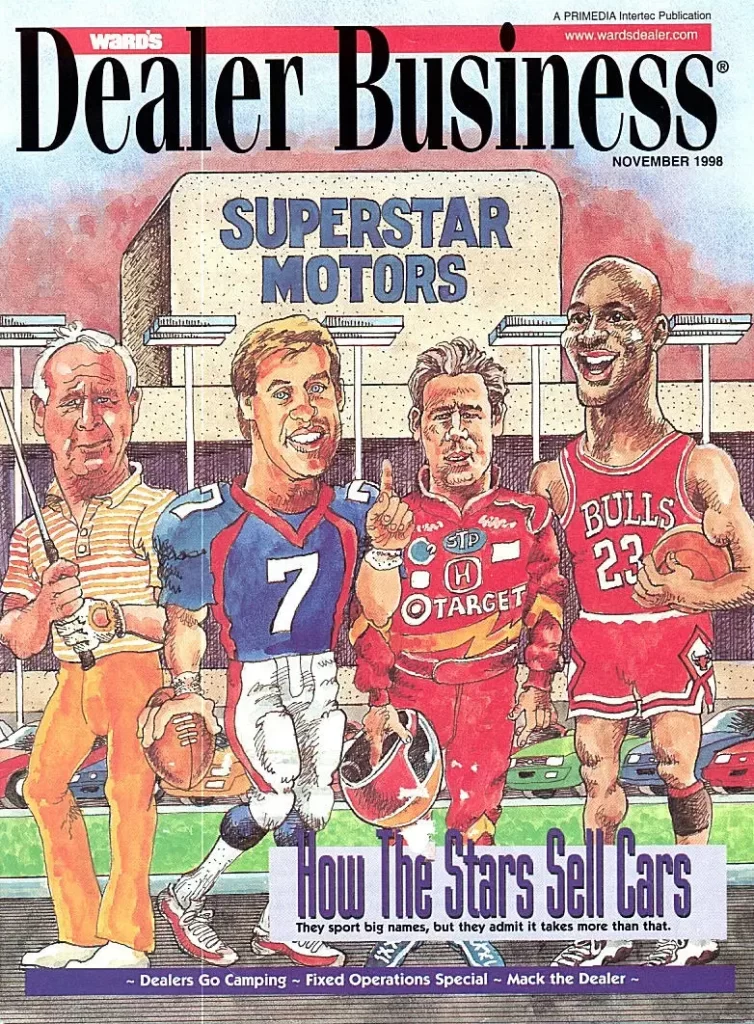 I helped two of the four shown in the photo enter the car business and both are thriving today.